

i-ACTIV AWD vs. 4x4: Why Surrey Drivers Need Predictive All-Wheel Drive
November 28 2025,
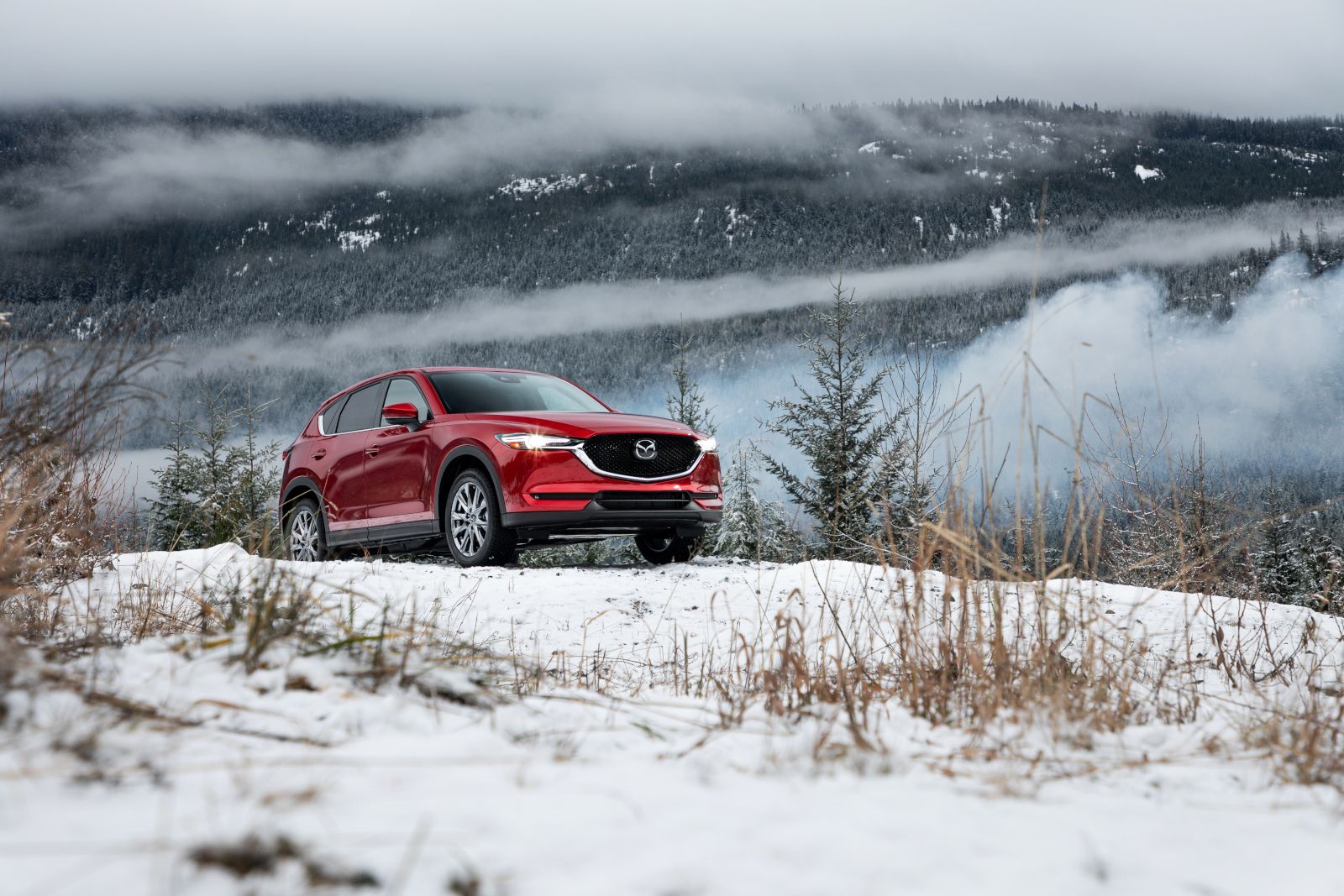
Surrey drivers know the reality of British Columbia's wet season. From October through March, rain-slicked bridges, sudden downpours on Highway 1, and unpredictable conditions on the Port Mann Bridge create daily challenges that demand more than just four-wheel drive. While traditional 4x4 systems excel in deep mud or rocky trails, Mazda's i-ACTIV AWD system takes a different approach—one designed specifically for the conditions Surrey drivers face every day.
The distinction matters. i-ACTIV AWD doesn't wait for wheels to slip before reacting. Instead, it continuously monitors 27 different sensors to predict traction loss before it happens, adjusting power distribution up to 200 times per second. For drivers navigating wet merge lanes, slick overpasses, or sudden rain squalls, this predictive capability provides confidence that reactive 4x4 systems simply cannot match.
How i-ACTIV AWD Works: Predictive vs. Reactive Systems
Traditional 4x4 systems operate reactively. When sensors detect wheel slip, the system engages to redistribute power—a process that creates a noticeable delay between loss of traction and corrective action. This lag proves particularly problematic on wet pavement, where milliseconds determine whether a vehicle maintains control or begins to slide.
i-ACTIV AWD reverses this logic. The system constantly analyzes data from sensors monitoring:
- Outside temperature
- Wiper operation and speed
- Steering wheel angle and rate of change
- Throttle position
- Individual wheel speeds
- Brake pressure
- Vehicle yaw rate
By processing this information in real-time, i-ACTIV AWD predicts when traction loss might occur and proactively adjusts torque distribution between front and rear axles. On a rain-soaked morning commute across the Alex Fraser Bridge, this means the system has already shifted power to the rear wheels before the driver feels any loss of grip.
The system pairs with G-Vectoring Control Plus (GVC Plus), which subtly adjusts engine torque during cornering to optimize weight transfer across all four wheels. This combination creates more predictable handling when navigating wet roundabouts or making quick lane changes on slippery highways—scenarios where Surrey drivers need immediate, confident response.
i-ACTIV AWD Across Mazda's Lineup
Mazda equips i-ACTIV AWD across its entire SUV lineup, with optional availability on sedan and hatchback models. Each application shares the same predictive logic while adapting to vehicle-specific dynamics.
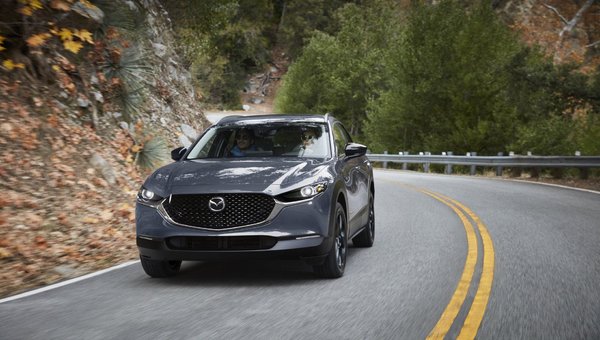
CX-30 (Standard i-ACTIV AWD)
- 2.5 L 4-cylinder engine producing 191 horsepower and 186 lb-ft of torque
- Cylinder Deactivation for improved fuel economy
- Off-Road Traction Assist standard
- 16-inch alloy wheels with 215/65R16 all-season tires
- Ground clearance optimized for urban driving and light trail use
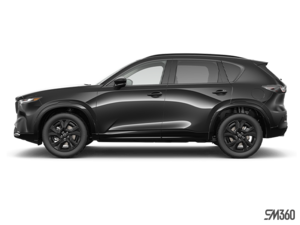
CX-5 (Standard i-ACTIV AWD)
- 2.5 L 4-cylinder engine producing 187 horsepower and 186 lb-ft of torque
- Mi-Drive system with Sport and Off-Road modes
- 17-inch silver metallic alloy wheels with 225/65R17 all-season tires
- Independent multi-link rear suspension for refined ride quality
- Rain-sensing windshield wipers that trigger increased AWD engagement
CX-70 (Standard i-ACTIV AWD)
- 3.3 L inline-6 turbocharged engine with 48-volt mild-hybrid system
- 280 horsepower and 332 lb-ft of torque
- Mi-Drive with Normal, Sport, Off-Road, and Towing modes
- Kinematic Posture Control (KPC) for enhanced stability in corners
- 2,268 kg (5,000 lb) towing capacity with Mazda Genuine Towing Accessories
- 19-inch wheels with 265/55R19 tires
CX-90 (Standard i-ACTIV AWD)
- Same 3.3 L inline-6 turbocharged mild-hybrid powertrain as CX-70
- Three-row seating configuration
- Trailer Stability Control and Hill Descent Control
- 1,588 kg (3,500 lb) towing capacity
- Enhanced sound insulation with noise-isolating windshield
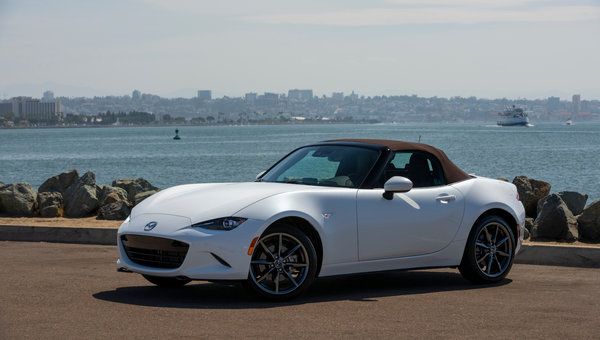
Mazda3 and Mazda3 Sport (Optional i-ACTIV AWD)
- Available with GS Luxury Package or GT trim
- 2.5 L 4-cylinder engine (186 lb-ft of torque)
- Optional 2.5 L turbocharged engine: 250 horsepower with 93 octane fuel (227 horsepower with 87 octane), 320 lb-ft of torque
- Skyactiv-Drive 6-speed automatic transmission with manual-shift mode
- 18-inch alloy wheels on turbocharged models
Surrey-Specific Driving Scenarios: Where i-ACTIV AWD Excels
Wet Bridge Decks and Overpasses
Surrey's network of bridges—including the Pattullo, Alex Fraser, and Port Mann—present unique traction challenges. Bridge decks freeze faster than road surfaces and accumulate standing water that creates hydroplaning risk. i-ACTIV AWD monitors outside temperature and wiper activity to recognize these conditions, automatically biasing torque rearward to maintain stability. When crossing the Port Mann during a sudden rainstorm, this proactive adjustment prevents the front-wheel slip that often catches drivers off-guard mid-span.
Highway 1 Merge Lanes in Rain
Merging onto Highway 1 from 152nd Street or King George Boulevard during wet conditions requires confident acceleration. i-ACTIV AWD reads throttle input and steering angle to predict the driver's intent, distributing power to maximize grip as the vehicle accelerates through the merge. The system's 200-times-per-second adjustment rate means torque distribution adapts continuously as the vehicle transitions from the on-ramp curve to the highway straightaway.
Residential Streets After Rainfall
Surrey's tree-lined residential streets accumulate leaves, moss, and debris that become slippery when wet. i-ACTIV AWD's sensitivity to small steering corrections helps maintain control when navigating these low-speed scenarios. The system recognizes the driver making minor adjustments to avoid obstacles and ensures power delivery remains smooth and predictable—preventing the jerky response that can unsettle a vehicle on slick surfaces.
Sudden Weather Changes
British Columbia's Lower Mainland experiences rapid weather transitions, particularly during spring and fall. A dry morning commute can become a wet afternoon drive home within hours. i-ACTIV AWD adapts instantly to these changes, using wiper activation as an immediate trigger to increase rear-wheel torque bias. Drivers don't need to manually engage a different mode or wait for the system to "learn" new conditions—the adjustment happens automatically.
i-ACTIV AWD vs. Traditional 4x4: Key Differences
|
Feature |
i-ACTIV AWD |
Traditional 4x4 |
|
Operating Logic |
Predictive—adjusts before slip occurs |
Reactive—responds after detecting slip |
|
Sensor Count |
27 sensors monitoring multiple inputs |
Typically 4-8 sensors (wheel speed, yaw) |
|
Adjustment Speed |
Up to 200 times per second |
10-30 times per second |
|
Primary Use Case |
Wet pavement, slick bridges, highway driving |
Off-road trails, deep mud, rock crawling |
|
Driver Input Required |
Fully automatic, no mode selection needed |
Often requires manual engagement (2H/4H/4L) |
|
Fuel Economy Impact |
Minimal—system disengages when not needed |
Higher—4x4 components add weight and drag |
|
On-Road Handling |
Optimized for pavement dynamics |
Compromised by off-road-oriented gearing |
Mi-Drive Integration: Adapting i-ACTIV AWD to Conditions
Mazda's CX-5, CX-70, and CX-90 models pair i-ACTIV AWD with the Mi-Drive system, allowing drivers to select drive modes that adjust throttle response, transmission shift points, and AWD behavior:
Normal Mode
Balances fuel economy with responsive power delivery. i-ACTIV AWD maintains its predictive monitoring but prioritizes efficiency, sending more power to the front wheels during steady cruising and engaging the rear axle only when sensors predict traction loss.
Sport Mode
Increases throttle sensitivity and holds transmission gears longer. i-ACTIV AWD biases more torque rearward even during dry conditions, creating a more engaging driving experience with sharper turn-in response.
Off-Road Mode
Optimizes traction for gravel roads, dirt trails, and light off-road use. The system allows more wheel slip before intervening, enabling the vehicle to "dig in" on loose surfaces. Throttle response becomes more gradual to prevent sudden torque spikes that could break traction.
Towing Mode (CX-70 Only)
Adjusts transmission shift logic and AWD behavior for trailer stability. The system increases rear torque bias to counteract trailer weight and monitors yaw rate more aggressively to detect trailer sway before it becomes problematic.
G-Vectoring Control Plus: The Hidden Partner
While i-ACTIV AWD manages front-to-rear torque distribution, G-Vectoring Control Plus (GVC Plus) handles lateral weight transfer during cornering. The system works by making subtle reductions in engine torque as the driver turns the steering wheel, shifting weight onto the front tires to increase grip. As the vehicle exits the corner, GVC Plus restores torque and applies light brake pressure to the inside wheels, stabilizing the chassis and reducing body roll.
This coordination between i-ACTIV AWD and GVC Plus creates a more connected driving feel, particularly on wet roads where weight transfer directly impacts available traction. Surrey drivers navigating the curves of Highway 10 or the roundabouts along 152nd Street benefit from this seamless integration—the vehicle feels planted and predictable rather than vague or floaty.
Real-World Fuel Economy: Predictive Efficiency
One advantage of i-ACTIV AWD's predictive logic: the system disengages rear-wheel drive when conditions don't require it. During dry highway cruising, the system routes power exclusively to the front wheels, reducing mechanical drag and improving fuel economy. Traditional 4x4 systems often maintain partial engagement even when unnecessary, creating constant parasitic loss.
Mazda's Cylinder Deactivation technology (standard on CX-30 and available on other models) complements this efficiency. When cruising at steady speeds, the engine can deactivate two cylinders to reduce fuel consumption. The system reactivates all cylinders instantly when the driver accelerates or when i-ACTIV AWD detects conditions requiring additional power—a seamless transition that drivers rarely notice.
Which Mazda Model Fits Surrey Driving?
For Urban Commuters: CX-30
Compact size makes parking and maneuvering easier in Surrey's shopping districts and residential areas. Standard i-ACTIV AWD and Off-Road Traction Assist provide confidence without excess capability. Fuel-efficient 2.5 L engine balances power and economy for daily driving.
For Families: CX-5
Proven reliability and spacious cargo area accommodate growing families and weekend gear. Mi-Drive system adapts to varied conditions from school drop-offs to weekend getaways. Available Bose premium audio and ventilated seats elevate comfort on longer trips.
For Active Lifestyles: CX-70
Powerful inline-6 engine and 2,268 kg (5,000 lb) towing capacity handle boats, trailers, and recreational equipment. Remote-folding rear seats simplify loading bulky items. Kinematic Posture Control enhances stability when towing or carrying heavy cargo.
For Larger Families: CX-90
Three-row seating accommodates up to seven passengers. Same powertrain as CX-70 provides confident acceleration even when fully loaded. Trailer Stability Control adds safety when towing with passengers aboard.
For Driving Enthusiasts: Mazda3 Sport with Turbo and i-ACTIV AWD
Turbocharged 2.5 L engine delivers 250 horsepower and 320 lb-ft of torque with premium fuel. Sport-tuned suspension and available paddle shifters create engaging driving dynamics. Compact size and responsive steering make the most of Surrey's winding roads.
Experience i-ACTIV AWD at Wolfe Mazda in Surrey
Mazda's i-ACTIV AWD system represents a fundamental shift in how all-wheel drive manages traction. Rather than reacting to slip after it occurs, the system predicts loss of grip and adjusts power distribution proactively—a capability that transforms wet-weather driving confidence for Surrey drivers navigating bridges, highways, and residential streets throughout British Columbia's rainy season.
Schedule a test drive at Wolfe Mazda in Surrey to experience how i-ACTIV AWD responds to real-world conditions. Feel the difference predictive traction management makes when accelerating onto Highway 1 in the rain or navigating wet roundabouts during your daily commute.